EMT Practice Test

1. Question Content...

Question List

Question1: The responses to some HTTP requests can be cached depending on the HTTP verb used in the request.
According to the HTTP specification, for what HTTP verbs is this safe to do?

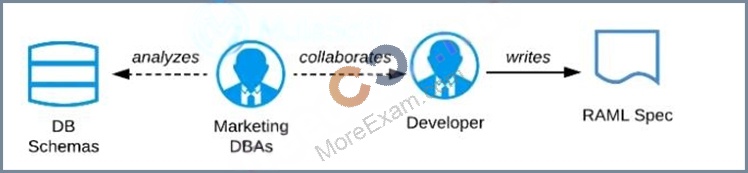
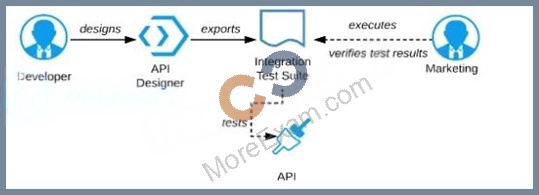
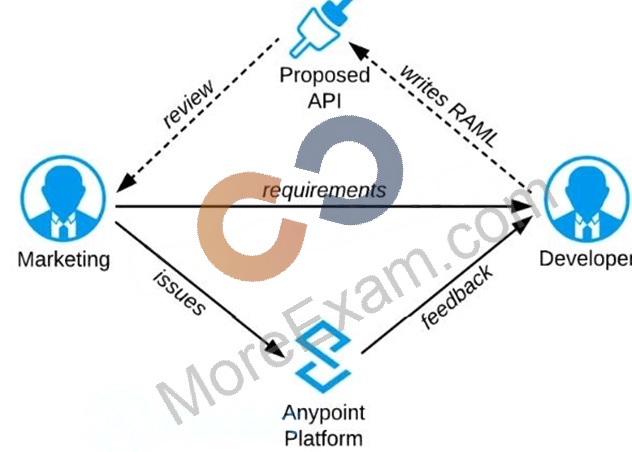
Question2: Refer to the exhibit.

A RAML definition has been proposed for a new Promotions Process API, and has been published to Anypoint Exchange.
The Marketing Department, who will be an important consumer of the Promotions API, has important requirements and expectations that must be met.
What is the most effective way to use Anypoint Platform features to involve the Marketing Department in this early API design phase?
A) Ask the Marketing Department to interact with a mocking implementation of the API using the automatically generated API Console

B) Organize a design workshop with the DBAs of the Marketing Department in which the database schema of the Marketing IT systems is translated into RAML

C) Use Anypoint Studio to Implement the API as a Mule application, then deploy that API implementation to CloudHub and ask the Marketing Department to interact with it

D) Export an integration test suite from API designer and have the Marketing Department execute the tests In that suite to ensure they pass

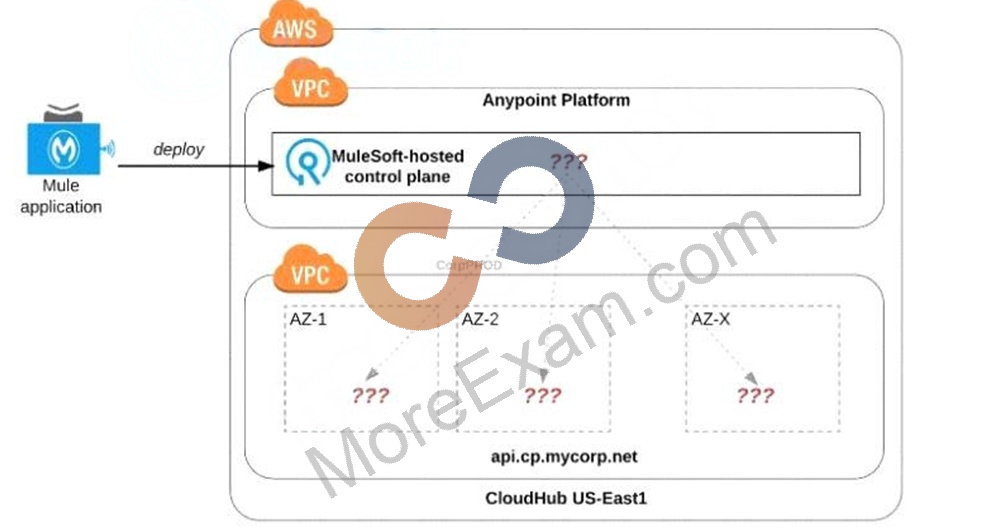
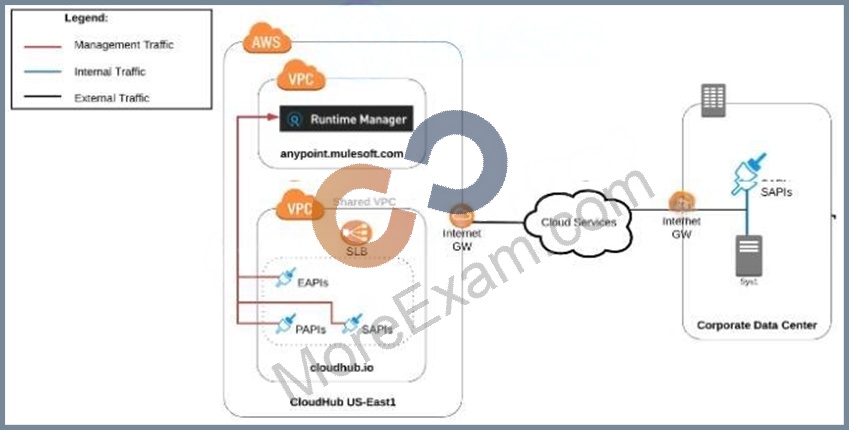
Question3: Refer to the exhibit.

An organization uses one specific CloudHub (AWS) region for all CloudHub deployments.
How are CloudHub workers assigned to availability zones (AZs) when the organization's Mule applications are deployed to CloudHub in that region?

Question4: An API experiences a high rate of client requests (TPS) vwth small message paytoads. How can usage limits be imposed on the API based on the type of client application?

Question5: An API experiences a high rate of client requests (TPS) vwth small message paytoads. How can usage limits be imposed on the API based on the type of client application?

Question6: The implementation of a Process API must change.
What is a valid approach that minimizes the impact of this change on API clients?

Question7: What best describes the Fully Qualified Domain Names (FQDNs), also known as DNS entries, created when a Mule application is deployed to the CloudHub Shared Worker Cloud?

Question8: What is true about automating interactions with Anypoint Platform using tools such as Anypoint Platform REST APIs, Anypoint CU, or the Mule Maven plugin?

Question9: What is a key requirement when using an external Identity Provider for Client Management in Anypoint Platform?

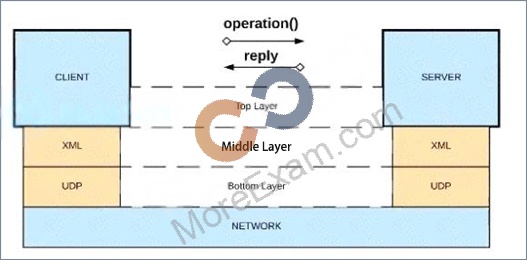
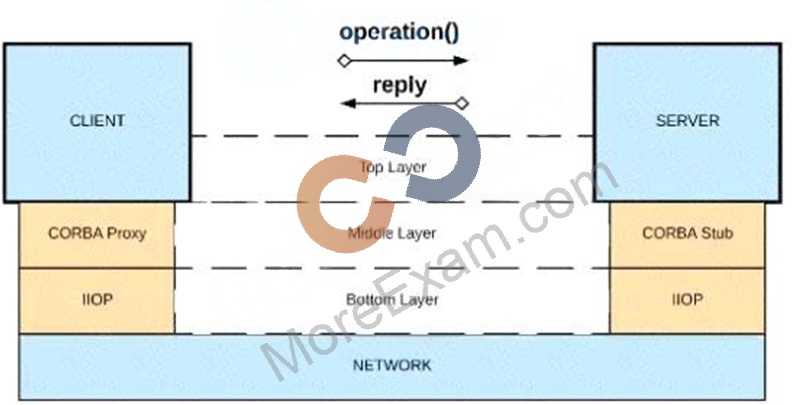
Question10: Refer to the exhibit.

What is a valid API in the sense of API-led connectivity and application networks?
A) Java RMI over TCP

B) Java RMI over TCP

C) CORBA over HOP

D) XML over UDP

Question11: What is true about where an API policy is defined in Anypoint Platform and how it is then applied to API instances?

Question12: An organization has implemented a Customer Address API to retrieve customer address information. This API has been deployed to multiple environments and has been configured to enforce client IDs everywhere.
A developer is writing a client application to allow a user to update their address. The developer has found the Customer Address API in Anypoint Exchange and wants to use it in their client application.
What step of gaining access to the API can be performed automatically by Anypoint Platform?

Question13: An organization makes a strategic decision to move towards an IT operating model that emphasizes consumption of reusable IT assets using modern APIs (as defined by MuleSoft).
What best describes each modern API in relation to this new IT operating model?

Question14: What API policy would be LEAST LIKELY used when designing an Experience API that is intended to work with a consumer mobile phone or tablet application?

Question15: What is true about API implementations when dealing with legal regulations that require all data processing to be performed within a certain jurisdiction (such as in the USA or the EU)?

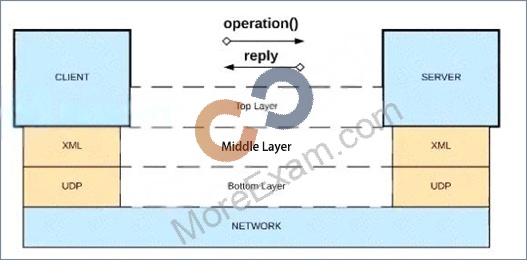
Question16: Refer to the exhibit.

What is a valid API in the sense of API-led connectivity and application networks?
A) Java RMI over TCP

B) Java RMI over TCP

C) CORBA over HOP

D) XML over UDP

Question17: What is a typical result of using a fine-grained rather than a coarse-grained API deployment model to implement a given business process?

Question18: A System API is designed to retrieve data from a backend system that has scalability challenges. What API policy can best safeguard the backend system?

Question19: What is true about the technology architecture of Anypoint VPCs?

Question20: In an organization, the InfoSec team is investigating Anypoint Platform related data traffic.
From where does most of the data available to Anypoint Platform for monitoring and alerting originate?

Question21: What do the API invocation metrics provided by Anypoint Platform provide?
Question22: A new upstream API Is being designed to offer an SLA of 500 ms median and 800 ms maximum (99th percentile) response time. The corresponding API implementation needs to sequentially invoke 3 downstream APIs of very similar complexity.
The first of these downstream APIs offers the following SLA for its response time: median: 100 ms, 80th percentile: 500 ms, 95th percentile: 1000 ms.
If possible, how can a timeout be set in the upstream API for the invocation of the first downstream API to meet the new upstream API's desired SLA?

Question23: What is the most performant out-of-the-box solution in Anypoint Platform to track transaction state in an asynchronously executing long-running process implemented as a Mule application deployed to multiple CloudHub workers?

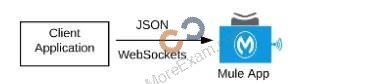
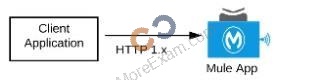
Question24: What Mule application can have API policies applied by Anypoint Platform to the endpoint exposed by that Mule application?
A) A Mule application that accepts requests over HTTP/1.x

B) A Mule application that accepts JSON requests over TCP but is NOT required to provide a response

C) A Mute application that accepts JSON requests over WebSocket

D) A Mule application that accepts gRPC requests over HTTP/2

Question25: When using CloudHub with the Shared Load Balancer, what is managed EXCLUSIVELY by the API implementation (the Mule application) and NOT by Anypoint Platform?

Question26: Mule applications that implement a number of REST APIs are deployed to their own subnet that is inaccessible from outside the organization.
External business-partners need to access these APIs, which are only allowed to be invoked from a separate subnet dedicated to partners - called Partner-subnet. This subnet is accessible from the public internet, which allows these external partners to reach it.
Anypoint Platform and Mule runtimes are already deployed in Partner-subnet. These Mule runtimes can already access the APIs.
What is the most resource-efficient solution to comply with these requirements, while having the least impact on other applications that are currently using the APIs?

Question27: Which of the following best fits the definition of API-led connectivity?

Question28: In which layer of API-led connectivity, does the business logic orchestration reside?

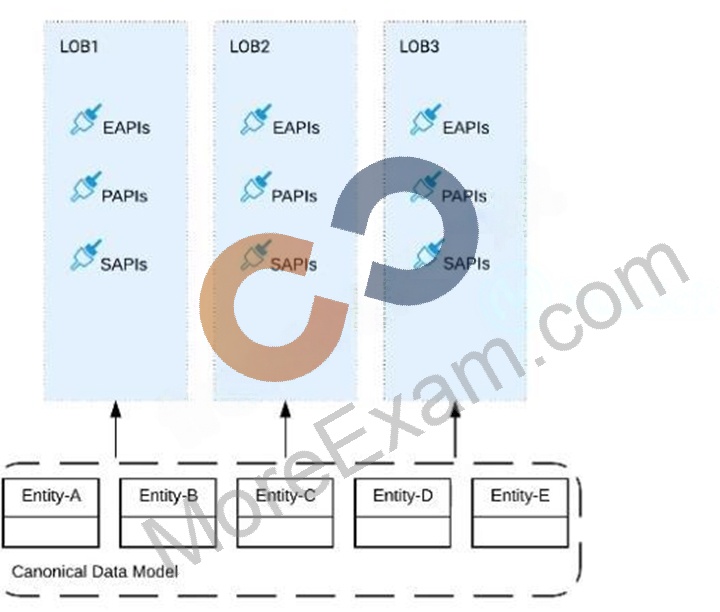
Question29: Refer to the exhibit.

Three business processes need to be implemented, and the implementations need to communicate with several different SaaS applications.
These processes are owned by separate (siloed) LOBs and are mainly independent of each other, but do share a few business entities. Each LOB has one development team and their own budget In this organizational context, what is the most effective approach to choose the API data models for the APIs that will implement these business processes with minimal redundancy of the data models?
A) Build several Bounded Context Data Models that align with coherent parts of the business processes and the definitions of associated business entities

B) Build distinct data models for each API to follow established micro-services and Agile API-centric practices

C) Build all API data models using XML schema to drive consistency and reuse across the organization

D) Build one centralized Canonical Data Model (Enterprise Data Model) that unifies all the data types from all three business processes, ensuring the data model is consistent and non-redundant

Question30: When must an API implementation be deployed to an Anypoint VPC?

Question31: A new upstream API Is being designed to offer an SLA of 500 ms median and 800 ms maximum (99th percentile) response time. The corresponding API implementation needs to sequentially invoke 3 downstream APIs of very similar complexity.
The first of these downstream APIs offers the following SLA for its response time: median: 100 ms, 80th percentile: 500 ms, 95th percentile: 1000 ms.
If possible, how can a timeout be set in the upstream API for the invocation of the first downstream API to meet the new upstream API's desired SLA?

Question32: What is the most performant out-of-the-box solution in Anypoint Platform to track transaction state in an asynchronously executing long-running process implemented as a Mule application deployed to multiple CloudHub workers?

Question33: A new upstream API Is being designed to offer an SLA of 500 ms median and 800 ms maximum (99th percentile) response time. The corresponding API implementation needs to sequentially invoke 3 downstream APIs of very similar complexity.
The first of these downstream APIs offers the following SLA for its response time: median: 100 ms, 80th percentile: 500 ms, 95th percentile: 1000 ms.
If possible, how can a timeout be set in the upstream API for the invocation of the first downstream API to meet the new upstream API's desired SLA?

Question34: An API implementation is deployed on a single worker on CloudHub and invoked by external API clients (outside of CloudHub).
How can an alert be set up that is guaranteed to trigger AS SOON AS that API implementation stops responding to API invocations?

Question35: A retail company is using an Order API to accept new orders. The Order API uses a JMS queue to submit orders to a backend order management service. The normal load for orders is being handled using two (2) CloudHub workers, each configured with 0.2 vCore. The CPU load of each CloudHub worker normally runs well below 70%. However, several times during the year the Order API gets four times (4x) the average number of orders. This causes the CloudHub worker CPU load to exceed 90% and the order submission time to exceed 30 seconds. The cause, however, is NOT the backend order management service, which still responds fast enough to meet the response SLA for the Order API. What is the MOST resource-efficient way to configure the Mule application's CloudHub deployment to help the company cope with this performance challenge?

Question36: What is most likely NOT a characteristic of an integration test for a REST API implementation?

Question37: An organization is implementing a Quote of the Day API that caches today's quote.
What scenario can use the GoudHub Object Store via the Object Store connector to persist the cache's state?

Question38: Refer to the exhibit.

A developer is building a client application to invoke an API deployed to the STAGING environment that is governed by a client ID enforcement policy.
What is required to successfully invoke the API?

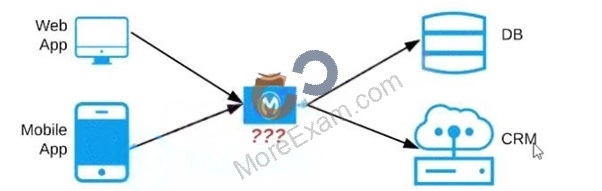
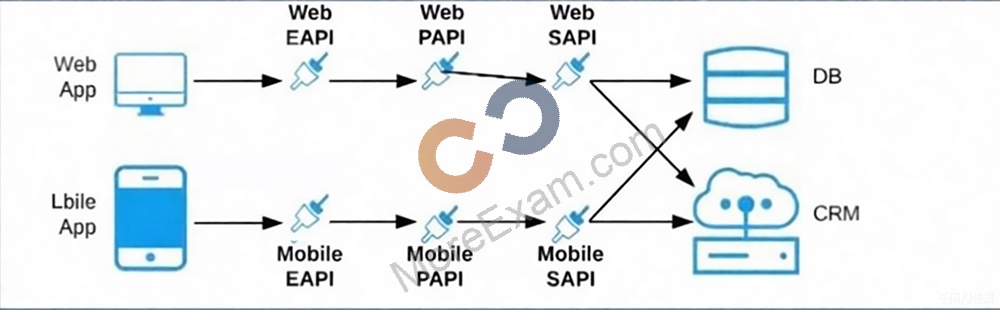
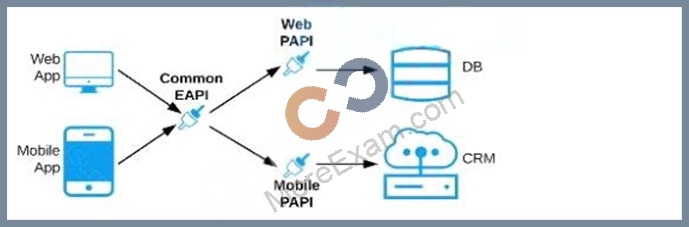
Question39: Refer to the exhibit. An organization needs to enable access to their customer data from both a mobile app and a web application, which each need access to common fields as well as certain unique fields.
The data is available partially in a database and partially in a 3rd-party CRM system.
What APIs should be created to best fit these design requirements?

A) A Process API that contains the data required by both the web and mobile apps, allowing these applications to invoke it directly and access the data they need thereby providing the flexibility to add more fields in the future without needing API changes

B) One set of APIs (Experience API, Process API, and System API) for the web app, and another set for the mobile app

C) Separate Experience APIs for the mobile and web app, but a common Process API that invokes separate System APIs created for the database and CRM system

D) A common Experience API used by both the web and mobile apps, but separate Process APIs for the web and mobile apps that interact with the database and the CRM System

Question40: A code-centric API documentation environment should allow API consumers to investigate and execute API client source code that demonstrates invoking one or more APIs as part of representative scenarios.
What is the most effective way to provide this type of code-centric API documentation environment using Anypoint Platform?

Question41: A Mule application exposes an HTTPS endpoint and is deployed to the CloudHub Shared Worker Cloud. All traffic to that Mule application must stay inside the AWS VPC.
To what TCP port do API invocations to that Mule application need to be sent?

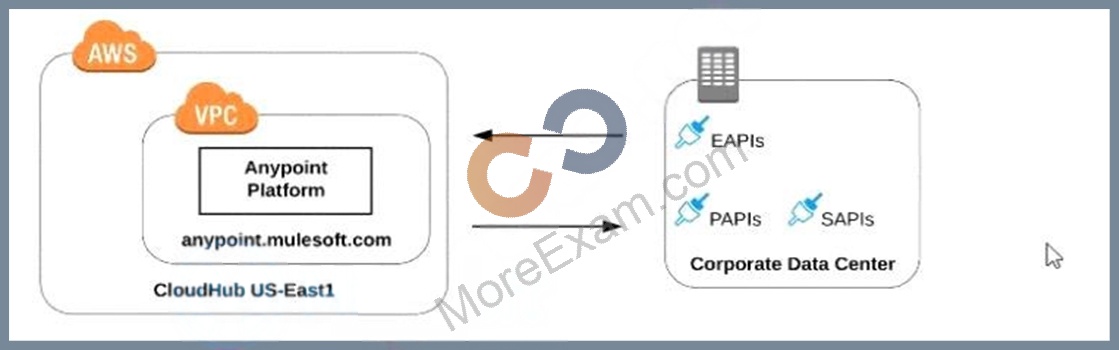
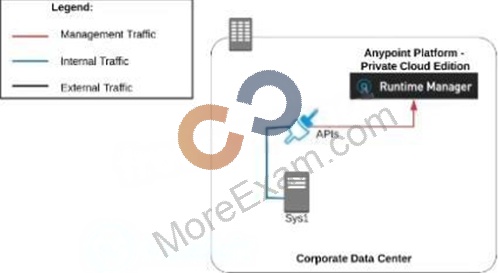
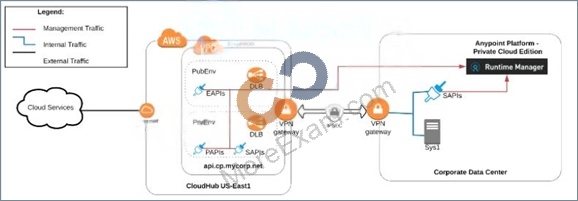
Question42: Refer to the exhibit.

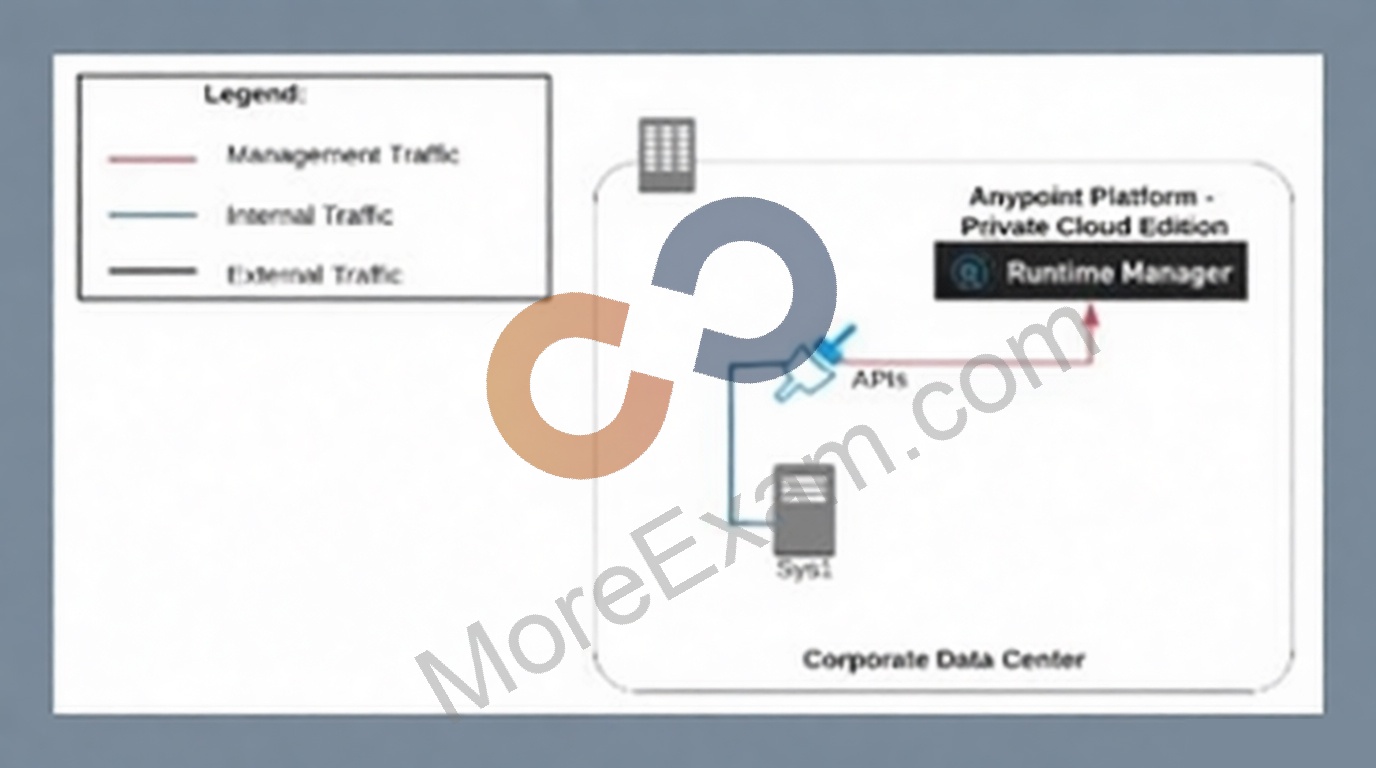
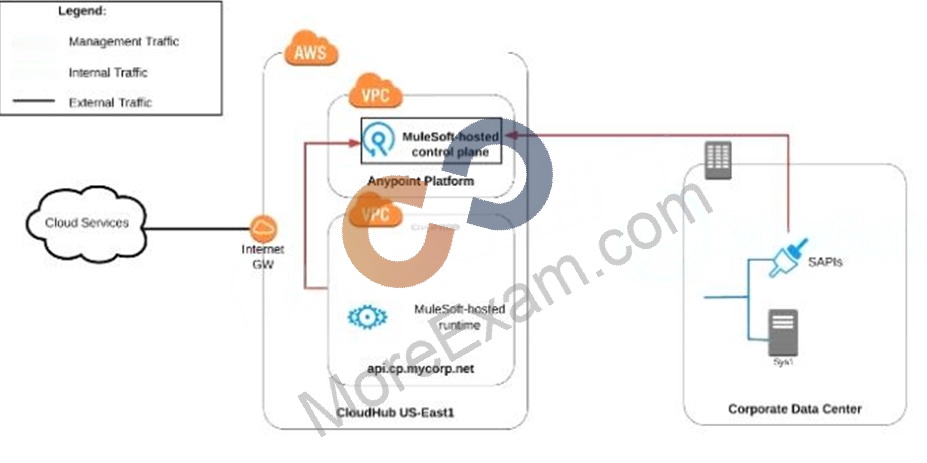
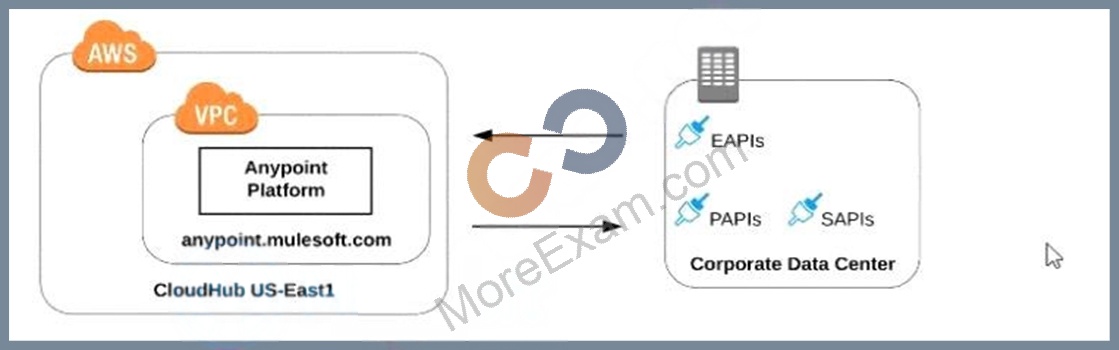
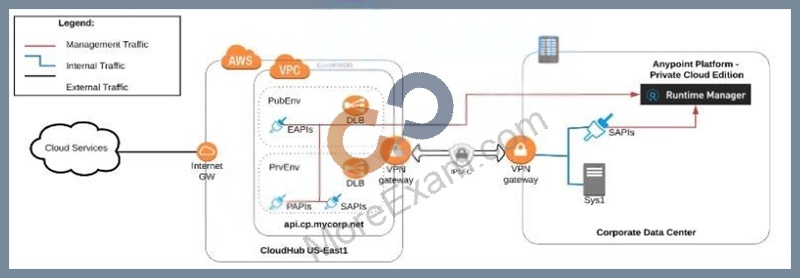
what is true when using customer-hosted Mule runtimes with the MuleSoft-hosted Anypoint Platform control plane (hybrid deployment)?

Question43: When designing an upstream API and its implementation, the development team has been advised to NOT set timeouts when invoking a downstream API, because that downstream API has no SLA that can be relied upon.
This is the only downstream API dependency of that upstream API.

Question44: What best explains the use of auto-discovery in API implementations?

Question45: An API has been updated in Anypoint exchange by its API producer from version 3.1.1 to 3.2.0 following accepted semantic versioning practices and the changes have been communicated via the APIs public portal. The API endpoint does NOT change in the new version. How should the developer of an API client respond to this change?

Question46: What CANNOT be effectively enforced using an API policy in Anypoint Platform?
Question47: An API implementation is deployed on a single worker on CloudHub and invoked by external API clients (outside of CloudHub). How can an alert be set up that is guaranteed to trigger AS SOON AS that API implementation stops responding to API invocations?

Question48: An organization uses various cloud-based SaaS systems and multiple on-premises systems. The on-premises systems are an important part of the organization's application network and can only be accessed from within the organization's intranet.
What is the best way to configure and use Anypoint Platform to support integrations with both the cloud-based SaaS systems and on-premises systems?
A) Use CloudHub-deployed Mule runtimes in an Anypoint VPC managed by Anypoint Platform Private Cloud Edition control plane

B) Use CloudHub-deployed Mule runtimes in the shared worker cloud managed by the MuleSoft-hosted Anypoint Platform control plane

C) Use an on-premises installation of Mule runtimes that are completely isolated with NO external network access, managed by the Anypoint Platform Private Cloud Edition control plane

D) Use a combination of Cloud Hub-deployed and manually provisioned on-premises Mule runtimes managed by the MuleSoft-hosted Anypoint Platform control plane

Question49: An organization is implementing a Quote of the Day API that caches today's quote.
What scenario can use the GoudHub Object Store via the Object Store connector to persist the cache's state?

Question50: What Mule application deployment scenario requires using Anypoint Platform Private Cloud Edition or Anypoint Platform for Pivotal Cloud Foundry?

Question51: Which of the following sequence is correct?

Question52: An API implementation is being designed that must invoke an Order API, which is known to repeatedly experience downtime.
For this reason, a fallback API is to be called when the Order API is unavailable.
What approach to designing the invocation of the fallback API provides the best resilience?

Question53: What is most likely NOT a characteristic of an integration test for a REST API implementation?

Question54: An API has been updated in Anypoint Exchange by its API producer from version 3.1.1 to 3.2.0 following accepted semantic versioning practices and the changes have been communicated via the API's public portal.
The API endpoint does NOT change in the new version.
How should the developer of an API client respond to this change?

Question55: What condition requires using a CloudHub Dedicated Load Balancer?

Question56: Mule applications that implement a number of REST APIs are deployed to their own subnet that is inaccessible from outside the organization.
External business-partners need to access these APIs, which are only allowed to be invoked from a separate subnet dedicated to partners - called Partner-subnet. This subnet is accessible from the public internet, which allows these external partners to reach it.
Anypoint Platform and Mule runtimes are already deployed in Partner-subnet. These Mule runtimes can already access the APIs.
What is the most resource-efficient solution to comply with these requirements, while having the least impact on other applications that are currently using the APIs?

Question57: What best describes the Fully Qualified Domain Names (FQDNs), also known as DNS entries, created when a Mule application is deployed to the CloudHub Shared Worker Cloud?

Question58: The implementation of a Process API must change.
What is a valid approach that minimizes the impact of this change on API clients?

Question59: In an organization, the InfoSec team is investigating Anypoint Platform related data traffic.
From where does most of the data available to Anypoint Platform for monitoring and alerting originate?

Question60: An API implementation is deployed on a single worker on CloudHub and invoked by external API clients (outside of CloudHub). How can an alert be set up that is guaranteed to trigger AS SOON AS that API implementation stops responding to API invocations?

Question61: An API implementation is updated. When must the RAML definition of the API also be updated?

Question62: An organization makes a strategic decision to move towards an IT operating model that emphasizes consumption of reusable IT assets using modern APIs (as defined by MuleSoft).
What best describes each modern API in relation to this new IT operating model?

Question63: A company uses a hybrid Anypoint Platform deployment model that combines the EU control plane with customer-hosted Mule runtimes. After successfully testing a Mule API implementation in the Staging environment, the Mule API implementation is set with environment-specific properties and must be promoted to the Production environment. What is a way that MuleSoft recommends to configure the Mule API implementation and automate its promotion to the Production environment?

Question64: A system API is deployed to a primary environment as well as to a disaster recovery (DR) environment, with different DNS names in each environment. A process API is a client to the system API and is being rate limited by the system API, with different limits in each of the environments. The system API's DR environment provides only 20% of the rate limiting offered by the primary environment. What is the best API fault-tolerant invocation strategy to reduce overall errors in the process API, given these conditions and constraints?

Question65: What best explains the use of auto-discovery in API implementations?

Question66: Due to a limitation in the backend system, a system API can only handle up to 500 requests per second. What is the best type of API policy to apply to the system API to avoid overloading the backend system?

Question67: A System API is designed to retrieve data from a backend system that has scalability challenges.
What API policy can best safeguard the backend system?

Question68: What correctly characterizes unit tests of Mule applications?

Question69: A company requires Mule applications deployed to CloudHub to be isolated between non-production and production environments. This is so Mule applications deployed to non-production environments can only access backend systems running in their customer-hosted non-production environment, and so Mule applications deployed to production environments can only access backend systems running in their customer-hosted production environment. How does MuleSoft recommend modifying Mule applications, configuring environments, or changing infrastructure to support this type of per-environment isolation between Mule applications and backend systems?

Question70: An organization uses various cloud-based SaaS systems and multiple on-premises systems. The on-premises systems are an important part of the organization's application network and can only be accessed from within the organization's intranet.
What is the best way to configure and use Anypoint Platform to support integrations with both the cloud-based SaaS systems and on-premises systems?

Question71: Select the correct Owner-Layer combinations from below options

Question72: An organization is deploying their new implementation of the OrderStatus System API to multiple workers in CloudHub. This API fronts the organization's on-premises Order Management System, which is accessed by the API implementation over an IPsec tunnel.
What type of error typically does NOT result in a service outage of the OrderStatus System API?

Question73: What API policy would be LEAST LIKELY used when designing an Experience API that is intended to work with a consumer mobile phone or tablet application?

Question74: Refer to the exhibit.

what is true when using customer-hosted Mule runtimes with the MuleSoft-hosted Anypoint Platform control plane (hybrid deployment)?

Question75: A code-centric API documentation environment should allow API consumers to investigate and execute API client source code that demonstrates invoking one or more APIs as part of representative scenarios.
What is the most effective way to provide this type of code-centric API documentation environment using Anypoint Platform?

Question76: What is a best practice when building System APIs?

Question77: When using CloudHub with the Shared Load Balancer, what is managed EXCLUSIVELY by the API implementation (the Mule application) and NOT by Anypoint Platform?

Question78: What is true about API implementations when dealing with legal regulations that require all data processing to be performed within a certain jurisdiction (such as in the USA or the EU)?

Question79: What CANNOT be effectively enforced using an API policy in Anypoint Platform?

Question80: An organization uses various cloud-based SaaS systems and multiple on-premises systems. The on-premises systems are an important part of the organization's application network and can only be accessed from within the organization's intranet.
What is the best way to configure and use Anypoint Platform to support integrations with both the cloud-based SaaS systems and on-premises systems?
A) Use CloudHub-deployed Mule runtimes in an Anypoint VPC managed by Anypoint Platform Private Cloud Edition control plane

B) Use CloudHub-deployed Mule runtimes in the shared worker cloud managed by the MuleSoft-hosted Anypoint Platform control plane

C) Use an on-premises installation of Mule runtimes that are completely isolated with NO external network access, managed by the Anypoint Platform Private Cloud Edition control plane

D) Use a combination of Cloud Hub-deployed and manually provisioned on-premises Mule runtimes managed by the MuleSoft-hosted Anypoint Platform control plane

Question81: A System API is designed to retrieve data from a backend system that has scalability challenges. What API policy can best safeguard the backend system?

Question82: A code-centric API documentation environment should allow API consumers to investigate and execute API client source code that demonstrates invoking one or more APIs as part of representative scenarios.
What is the most effective way to provide this type of code-centric API documentation environment using Anypoint Platform?

Question83: The implementation of a Process API must change.
What is a valid approach that minimizes the impact of this change on API clients?

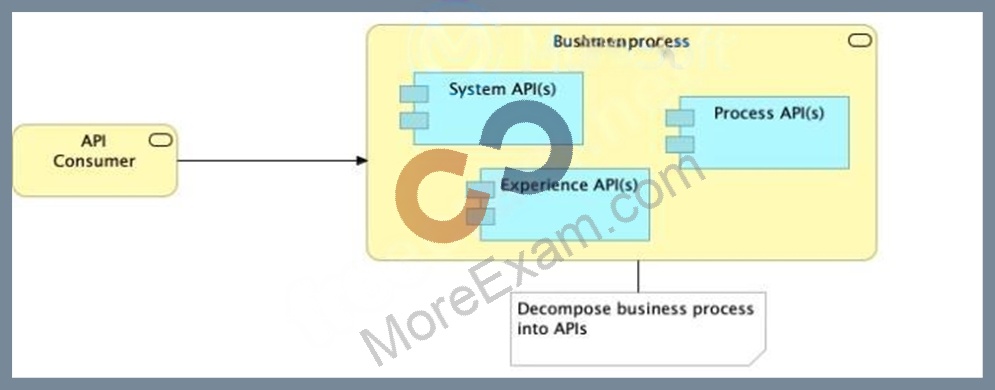
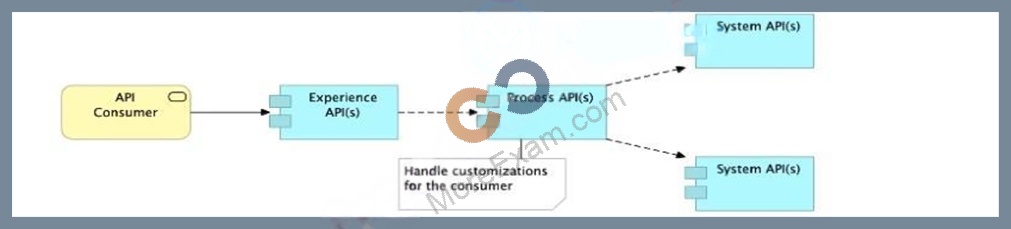
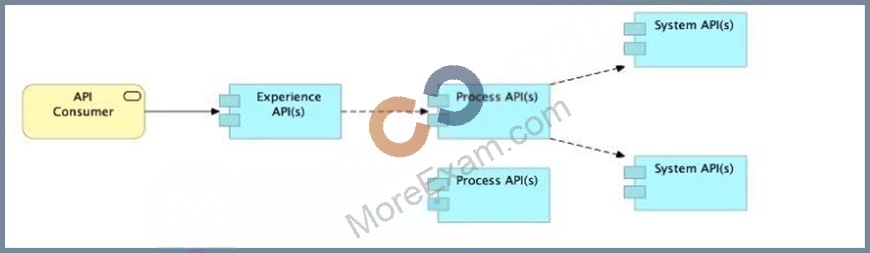
Question84: Refer to the exhibit.

What is the best way to decompose one end-to-end business process into a collaboration of Experience, Process, and System APIs?
A) Handle customizations for the end-user application at the Process API level rather than the Experience API level

B) Allow System APIs to return data that is NOT currently required by the identified Process or Experience APIs

C) Always use a tiered approach by creating exactly one API for each of the 3 layers (Experience, Process and System APIs)

D) Use a Process API to orchestrate calls to multiple System APIs, but NOT to other Process APIs